Number Fusion Roller
Reviews
Number Fusion Roller succeeds by taking a familiar puzzle concept and giving it a dynamic, real-time twist. The controls are simple enough for anyone to pick up, but the ever-changing path layouts and obstacle placements keep each session feeling fresh. The visual feedback is clear and satisfying, making every merge feel earned. While the game lacks depth in terms of modes or customization, its core loop is strong enough to keep players coming back for just one more try. It is an excellent choice for puzzle fans looking for something more active than a traditional tile game.
Description
Core Concept
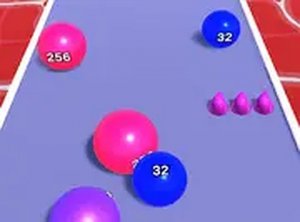
Number Fusion Roller takes the familiar number-merging idea from classic tile puzzles and turns it into a moving, real-time experience. Instead of sliding tiles on a grid, you control a single ball rolling forward along a path. Other numbered balls appear ahead, and you must decide whether to merge with them or steer around them. The challenge comes from the constant forward motion—you cannot pause to plan forever. This design forces you to think ahead while keeping your eyes on the road.
Path Navigation
The track is not a straight line. It curves left and right, sometimes splitting into multiple lanes. You use simple mouse or touch controls to guide your ball along the best route. Obstacles such as barriers or gaps appear without warning, requiring quick adjustments. The path layout changes each session, so no two runs feel exactly the same. This randomness keeps the gameplay fresh and encourages repeated attempts.
Merge Strategy
Merging is straightforward: when your ball touches another ball with the same number, they combine into one, doubling the number. A 2 and a 2 become a 4, then a 4 and a 4 become an 8, and so on. The larger your ball grows, the more points you earn. But large balls are harder to maneuver and become bigger targets for obstacles. You must decide whether to chase high-value merges or play it safe by merging smaller numbers first. This trade-off between risk and reward is the heart of the game.
Visual and Feedback Design
The game uses bright, clean colors and smooth animations to make each merge feel satisfying. Numbers are displayed clearly on each ball, and a subtle glow effect highlights when a merge is possible. The interface is minimal, with only essential information like your current number and score shown on screen. This uncluttered look helps players focus on the action without distraction. Sound effects provide gentle cues for merges and collisions, adding to the overall polish.
Session Structure
Each attempt is short, typically lasting a few minutes. The game ends when you hit an obstacle or fail to merge before a ball passes. This quick loop makes it easy to pick up for a few moments during a break or to play several rounds in a row. There is no story mode or campaign—just a continuous challenge to beat your own high score. The lack of a fixed endpoint means the game can be enjoyed casually or competitively, depending on your mood.