Math Marble Match
Reviews
Math Marble Match succeeds where many educational games fail: it makes math practice genuinely fun. The core loop of matching sums is simple to grasp but offers increasing depth as speeds rise and sums grow complex. The bright visuals and responsive controls keep the experience smooth. It's an excellent choice for parents wanting screen time that builds skills, or for anyone who enjoys a good brain teaser.
Description
Core Puzzle Concept
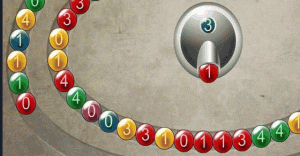
Math Marble Match reimagines arithmetic practice by embedding it within a fast-paced marble-shooting puzzle. Each round presents a target sum, and players must fire a numbered marble from a launcher at a moving row of marbles. The goal is to select a marble in the line whose number, when added to the launcher's marble, equals the target. Success clears both marbles and scores points, while a miss allows the line to advance. This mechanic trains quick mental addition and strategic planning under time pressure.
Visual Style and Accessibility
The game uses bright, distinct colors for each marble number, making values easy to identify at a glance. Smooth animations keep the action fluid without being distracting. The interface is clean, with the target sum prominently displayed. Controls are intuitive: aim with a mouse or finger tap, then fire. This design ensures that players of all ages and skill levels can start playing immediately, without lengthy tutorials.
Progressive Difficulty and Replay Value
As players advance, the target sums change and the marble line moves faster. Early rounds offer simple sums and slower speeds, allowing newcomers to build confidence. Later stages introduce more complex addition combinations and quicker pacing, demanding sharper mental arithmetic and faster reactions. This gradual ramp keeps the experience engaging over multiple sessions, as each new level feels like a fresh challenge rather than a repetition.
Educational Benefits Without Drudgery
Math Marble Match integrates learning seamlessly into its gameplay. Instead of worksheets or drills, players practice addition through active decision-making. The need to quickly compute sums under time constraints improves both speed and accuracy. Because the game rewards correct matches with points and visual feedback, it creates positive reinforcement that encourages repeated play. This makes it a useful tool for parents and teachers seeking a fun way to supplement math education.
Tips for Improving Performance
To excel, focus first on the target sum before scanning the moving line. Practice mental addition shortcuts, such as counting up from the launcher's number. Anticipate the line's movement to plan shots ahead of time. If you feel stuck, pause briefly to survey the entire row for the best match. Regular play naturally sharpens both your calculation speed and your aiming precision.